Sourdough Starter Rehydration Guide
How to Rehydrate Your Dried Sourdough Starter
Bring your dried sourdough starter back to life with this simple four-step method. You’ll begin by soaking your culture, then introduce flour and regular feeds to help it become active and ready for baking.
Use the timings below as a guide. Your starter’s progress will depend on temperature, flour and how quickly the dried culture reactivates. Look for increasing bubbles and a reliable rise after feeding.
What You’ll Need
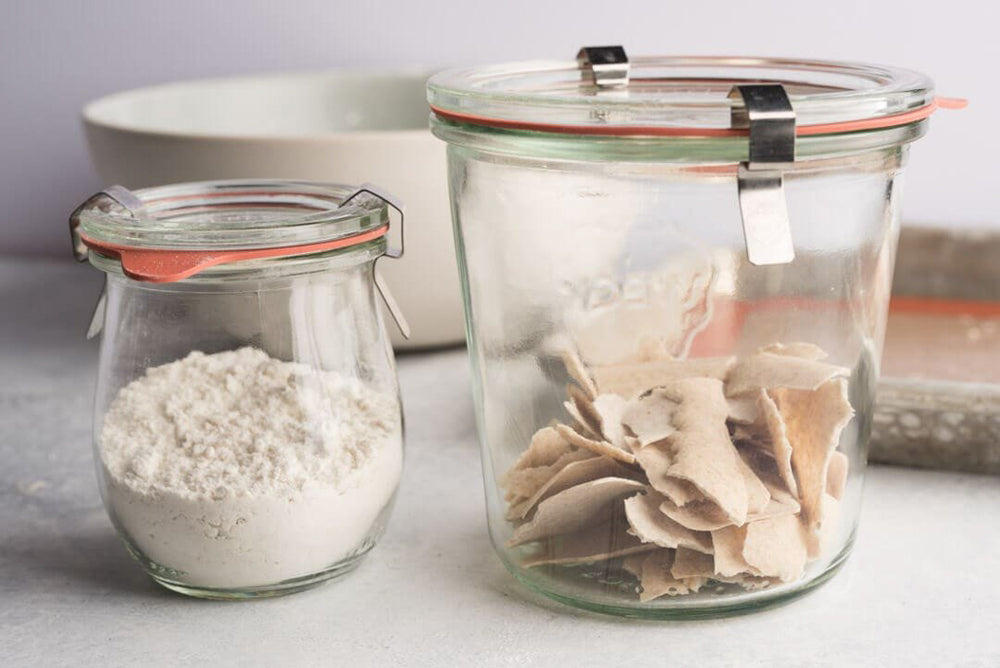
- Your 15 g packet of dried sourdough starter.
- A clean glass jar with room for the starter to expand.
- A loosely fitting lid.
- Water and your chosen flour.
- Digital kitchen scales and a spoon or spatula.
- A feeding band or marker to track the starter’s rise.
Choose a comfortably warm spot. Aim for around 25 °C during rehydration. Keep the jar out of direct sunlight and away from direct heat, and leave the lid loosely fitted.
If you use an oven with only the light on, check the temperature with a thermometer first — some ovens become too warm even with the heating switched off. Make sure nobody turns the oven on while your starter is inside.
Step 1 — Soak Your Dried Starter
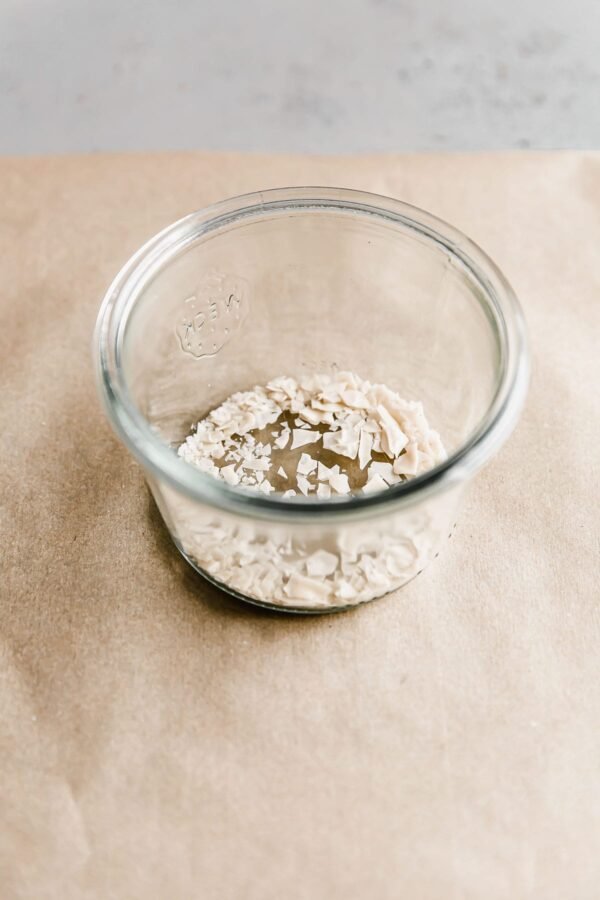
Add your dried sourdough starter and 50 g of water to a clean glass jar. Stir well, loosely cover with a lid and place in your warm spot.
Leave for 3 hours to allow the dried starter to soften and rehydrate.
Step 2 — Add the First Flour Feed
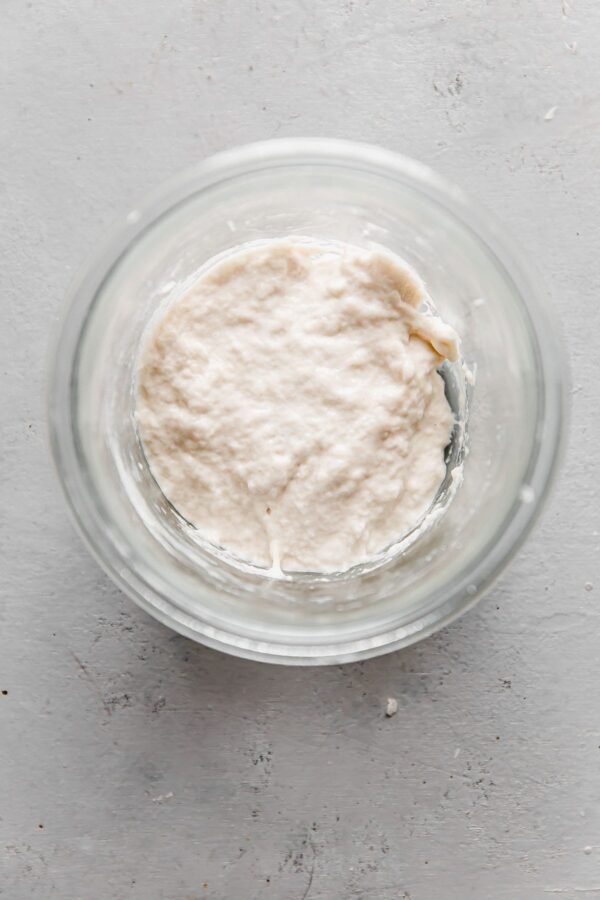
Add 35 g of flour to the jar and stir thoroughly. Loosely cover again and leave in your warm spot for 24 hours.
You may notice a few small bubbles by the end of this stage. Don’t expect a large rise yet — the culture is still waking up.
Step 3 — Feed Again and Watch for Activity
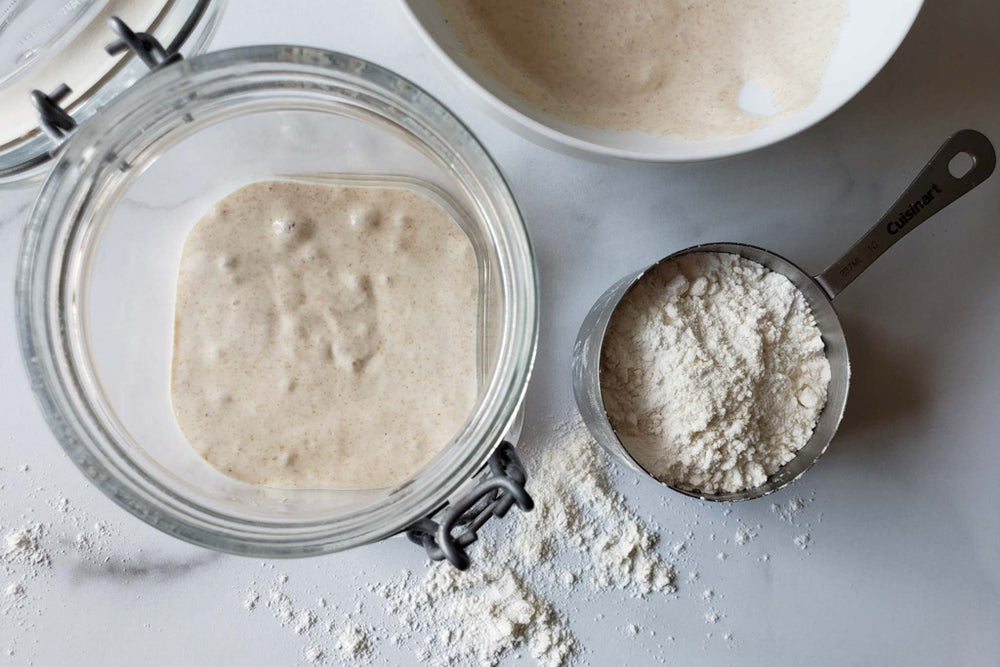
Add 100 g of water and 100 g of flour. Stir well, loosely replace the lid and leave for a further 12 hours.
Mark the starter’s level after mixing so you can see whether it rises. You may now notice more bubbles and an increase in volume, although a slower starter may need more time and further feeds.
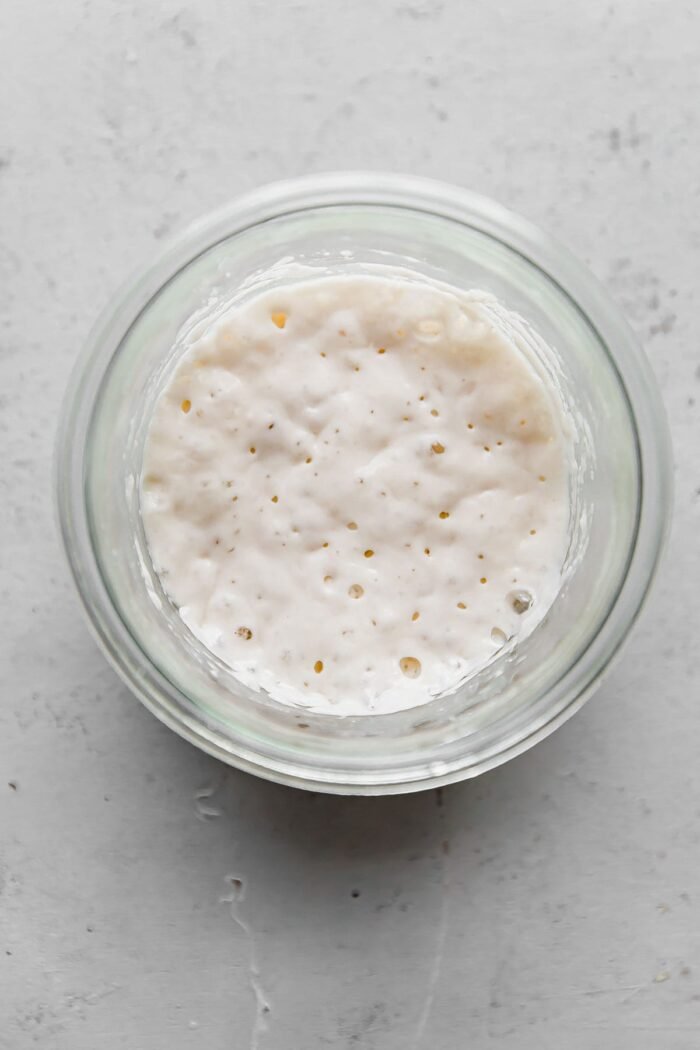
Step 4 — Establish a Regular Feeding Routine
Keep 100 g of starter and discard the remainder. Feed the retained starter with 100 g of flour and 100 g of water, then stir, mark the level and loosely cover.
Allow another 8–24 hours, watching for bubbles and a rise in the jar. This is a 1:1:1 feed by weight — one part starter, one part flour and one part water.
Continue with a regular sourdough starter feeding schedule to build a reliable, active culture.
Ready for feeding does not always mean ready for baking. Before making your first loaf, look for a starter that reliably rises after feeding and can at least double in volume. A few bubbles alone are not the same as dependable lifting power.
If your starter is still sluggish, continue caring for it and monitoring its progress rather than baking simply because the suggested time has passed.
From Your First Feed to Your First Loaf — All in One Guide
This page helps you get your dried starter going. For a complete baking companion, explore The Complete Beginner’s Guide to Sourdough.
Our beautifully illustrated 48-page digital eBook brings together starter rehydration, feeding ratios, ongoing care and every stage of your first loaf — from mixing and folding to shaping, proofing, scoring and baking.
With six recipes, troubleshooting advice and quick-reference charts, you’ll have a practical reference to return to as your confidence grows, with clear instructions and illustrations in one place.
Available to purchase separately as a digital PDF for your phone, tablet or computer.
Frequently Asked Questions
Should I seal the jar tightly?
No. Keep the lid loosely fitted during rehydration and feeding so gas can escape while the starter remains covered.
What if I only see a few bubbles after the first feed?
A small amount of activity is normal during the early stages. Keep following the method, check that your starter is comfortably warm and watch for increasing activity over subsequent feeds.
Why should I mark the starter’s level?
A feeding band or marker makes it easier to see how far the starter rises after feeding. It also helps you recognise when the starter has risen and then begun to fall.
When can I bake my first loaf?
Wait until your starter reliably rises after feeding and can at least double in volume. Rehydration times vary, so use its activity as your guide rather than relying only on the number of hours or days that have passed.
What should I do after rehydration?
Follow our sourdough starter feeding guide to establish a routine and maintain your culture between bakes.
Where can I find the full bread-making process?
The Complete Beginner’s Guide to Sourdough covers starter care and the full first-loaf process, with illustrations, recipes, troubleshooting and reference charts. The 48-page digital eBook is available to purchase separately.