Milk Kefir Fermenting Guide
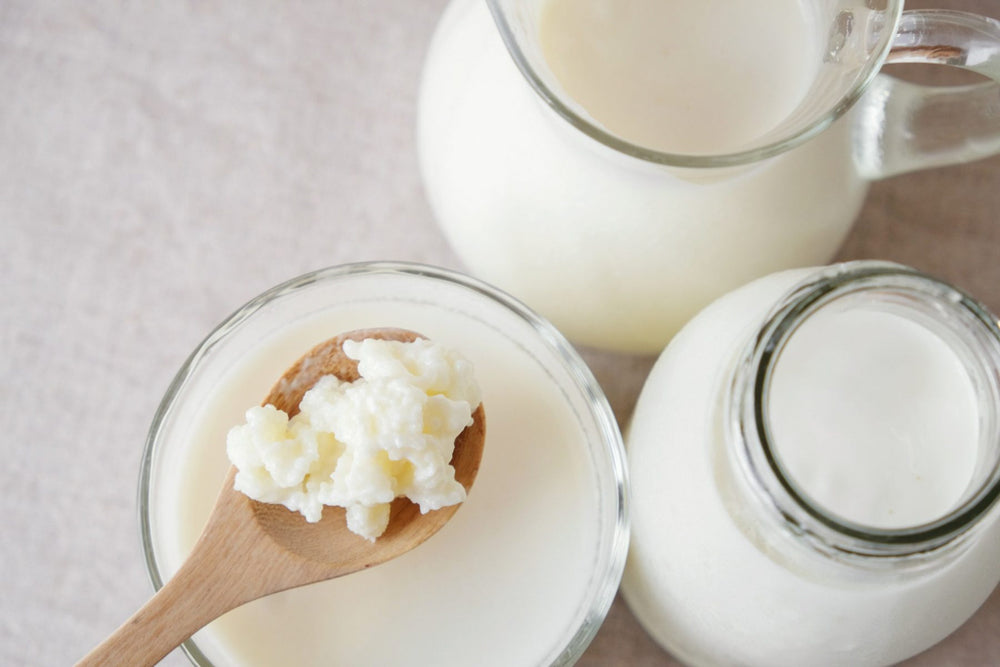
Milk Kefir is a creamy, tangy fermented milk drink made with living kefir grains — a symbiotic culture of bacteria and yeasts. With simple care, your grains will thrive and provide a lifetime of fresh, probiotic-rich kefir. Here’s a step-by-step guide on how to make milk kefir at home.
Step 1: Gather Your Milk Kefir Supplies
To brew milk kefir, you’ll need:
- Organic Milk Kefir Grains (enough for either 300ml or 600ml batches)
- Fresh whole milk (cow, goat or sheep)
- A glass jar — or try the Kefirko Milk Kefir Kit designed specially for kefir making
- A breathable cover (cloth or coffee filter + rubber band)
- A plastic or wooden spoon
- A fine-mesh strainer
Step 2: Prepare the Milk
Use the ratio below depending on your grain batch size:
- For a 300ml batch: add the 8g packet of grains to 300ml fresh whole milk.
- For a 600ml batch: add the 16g packet of grains to 600ml fresh whole milk.
Cut the top off your kefir packet and pour some of the milk into the packet to dislodge all the grains. Pour this into your glass jar along with the rest of the milk and give it a gentle stir.
Step 3: Ferment the Milk Kefir
- Cover with cloth and secure with a rubber band.
- Leave at room temperature (20–25°C) for 24–48 hours.
- The kefir should begin to thicken and develop a pleasantly tangy flavour. A longer ferment will generally produce a stronger, more sour flavour. If left longer, it may begin to separate into curds and whey.
Note: The first few ferments are a rebalancing period for your grains after transit. During this time, fermentation can be slower or faster than expected, the kefir may remain relatively thin, aromas and flavours may vary, and the grains may behave differently from an established culture. This is completely normal. Allow 3–6 fermentation cycles for the grains to fully acclimatise to their new milk and environment.
Want to understand what’s happening inside your jar? Our Complete Beginner’s Guide to Milk Kefir is a 40+ page digital guide that goes beyond the basic instructions. Learn how to read your ferment, understand the 3–6 cycle rebalancing period, control fermentation, adjust thickness and flavour, troubleshoot common problems and care for your grains long term.
Step 4: Strain and Reuse the Kefir Grains
- Strain the kefir into a clean jar — this liquid is your ready-to-drink homemade kefir.
- Return the grains to fresh milk to start a new batch, using the same ratio as above.
Step 5: Store, Flavour and Enjoy
- Refrigerate finished kefir to slow fermentation.
- Drink plain, add to smoothies, or use in recipes that call for buttermilk or yoghurt.
- Optional second ferment: Pour strained kefir into a suitable bottle or jar, add flavourings such as fruit, vanilla or cinnamon, and allow it to ferment further before refrigerating. Second fermentation can develop the flavour and character of your finished kefir.
Want to Learn More About Milk Kefir?
If you’re new to milk kefir or want to understand your culture beyond the basic instructions, explore our Complete Beginner’s Guide to Milk Kefir.
Our beautifully presented 40+ page digital eBook takes you from your first batch through to confidently managing your culture. It covers fermentation stages, temperature, time, grain-to-milk ratios, curds and whey, controlling thickness and flavour, second fermentation, different types of milk, taking breaks, long-term grain care, troubleshooting, recipes and more.
Most importantly, it teaches you to read the ferment, not just the clock, so you can understand what your kefir is telling you and adjust each batch with confidence.
That’s it! With just milk kefir grains and fresh milk — or a complete Kefirko Milk Kefir Kit — you can make authentic milk kefir at home. Want to try other ferments? Explore our Water Kefir Grains, Kombucha scoby, and Jun scoby.